
Heritage Stone Restoration
Restoration of aged and heritage stone floors — marble, limestone, travertine, terrazzo — in historic residences and institutional buildings across Accra and Cape Coast. Grinding, honing, crack and void repair, efflorescence and moisture control, and breathable re-sealing. Floor Experts Ghana — over 30 years of flooring expertise.
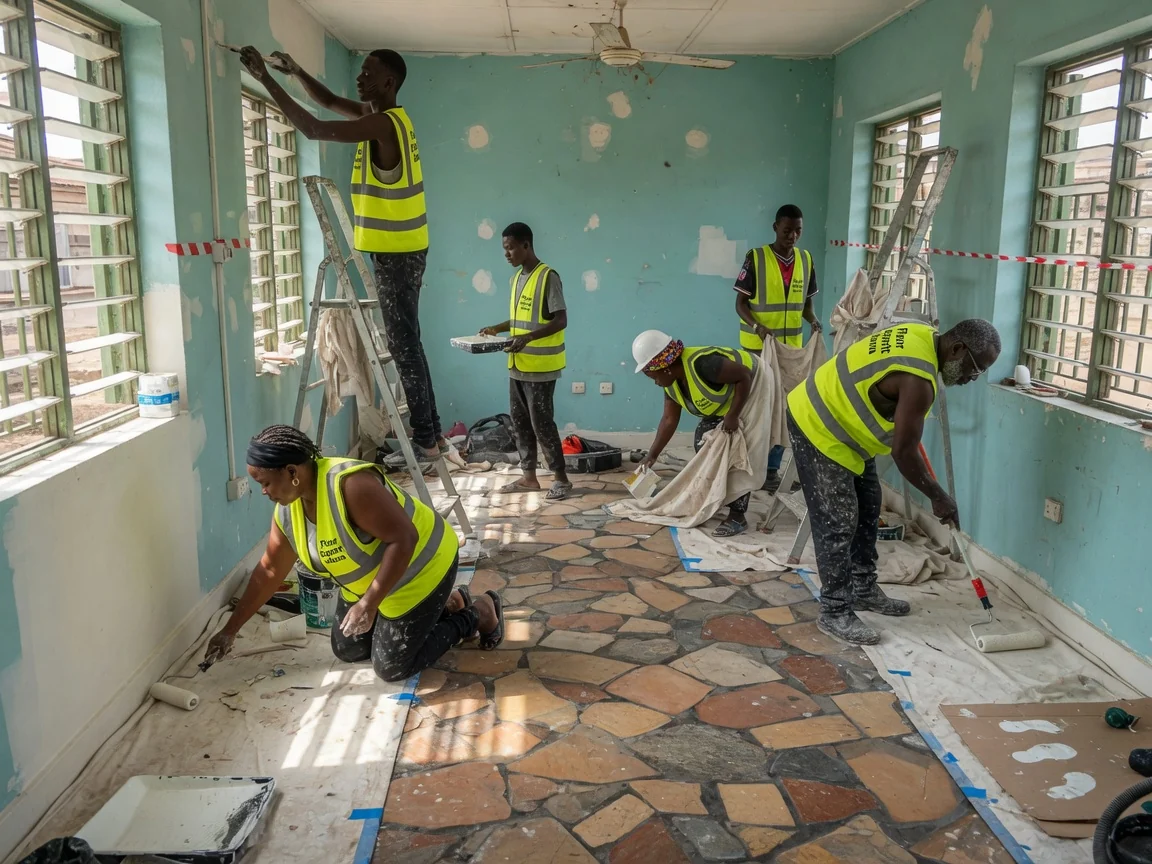
Heritage stone restoration is the return of aged and historic stone floors — marble, limestone, travertine and terrazzo — to a sound, true and sealed condition through repair, grinding, honing and breathable re-sealing, with the moisture driving their decay addressed at the same time. It is specified for historic residences, colonial-era institutional buildings and heritage interiors where a worn floor is to be saved, not replaced. Floor Experts Ghana has restored stone floors across Greater Accra, Cape Coast and Kumasi for over three decades.
Why Heritage Stone Floors Decay in Ghana’s Conditions — and How We Reverse It
An old stone floor rarely decays because the stone failed; it decays because three things were left unaddressed. Foot traffic wears the polish and etches the surface; spills stain porous, unsealed marble, limestone and travertine; and rising moisture carries dissolved salts up to crystallise as white efflorescence and to lift and spall the stone. In Ghana’s persistent 81–83% humidity that moisture pathway is relentless, which is why a floor that is simply re-polished without addressing the damp re-stains within a season.
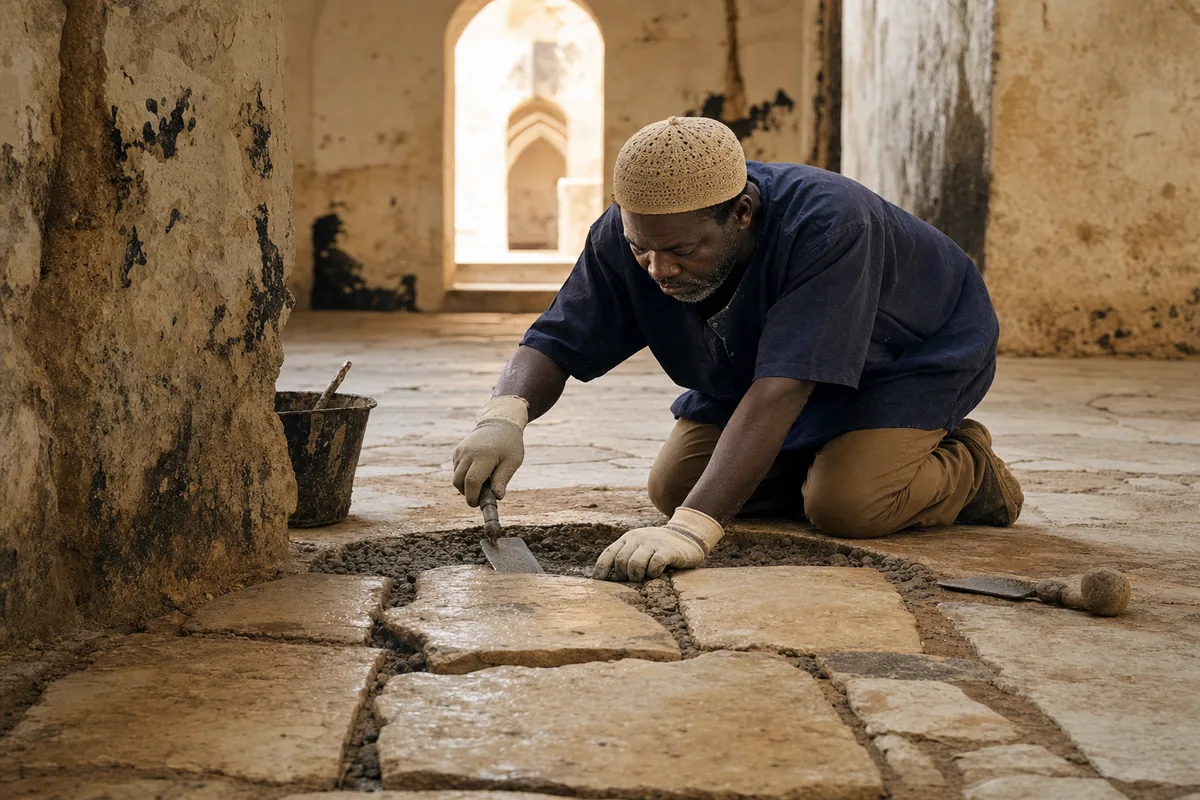
We treat moisture control, sound repair and breathable re-sealing as the heart of restoration. The deterioration is diagnosed, hollow flags are re-bedded and losses filled with matched material, the moisture and salt source is addressed, the surface is ground and honed back through progressive grits, and the stone is re-protected with a breathable impregnating (penetrating) sealer — never a film that would trap moisture beneath it. That discipline is what makes a restoration last rather than mask the problem.
Restoration Work We Carry Out in Accra & Cape Coast
Marble & Limestone Restoration
Grinding and honing back worn, etched and stained marble and limestone, repairing cracks, and re-sealing with a breathable impregnator.
Travertine Restoration
Re-filling opened voids, honing back the surface, and re-sealing filled-and-honed travertine that has pitted, dulled or stained.
Terrazzo Restoration
Grinding, honing and re-polishing terrazzo, with crack and aggregate repair — the cementitious composite found in many older institutional and civic floors.
Efflorescence & Moisture Remediation
Identifying and addressing the rising-moisture and salt source behind white efflorescence and spalling before any surface work, so the restoration holds.

The Restoration Controls We Work To
| Control | What it governs | Why it decides the restoration |
|---|---|---|
| Condition survey & diagnosis | Stone type & failure mode | Marble, limestone, travertine and terrazzo each take a different sequence — and the moisture source must be found |
| Re-bedding & matched repair | Structural soundness | Hollow flags and lost areas restored with matched material before any surface work |
| Grinding & honing | Surface restoration | Progressive-grit mechanical refinishing to remove wear, etching and old coatings and restore a true plane |
| Moisture & salt control | Efflorescence prevention | Addressing the rising-moisture pathway so the restored finish does not re-stain |
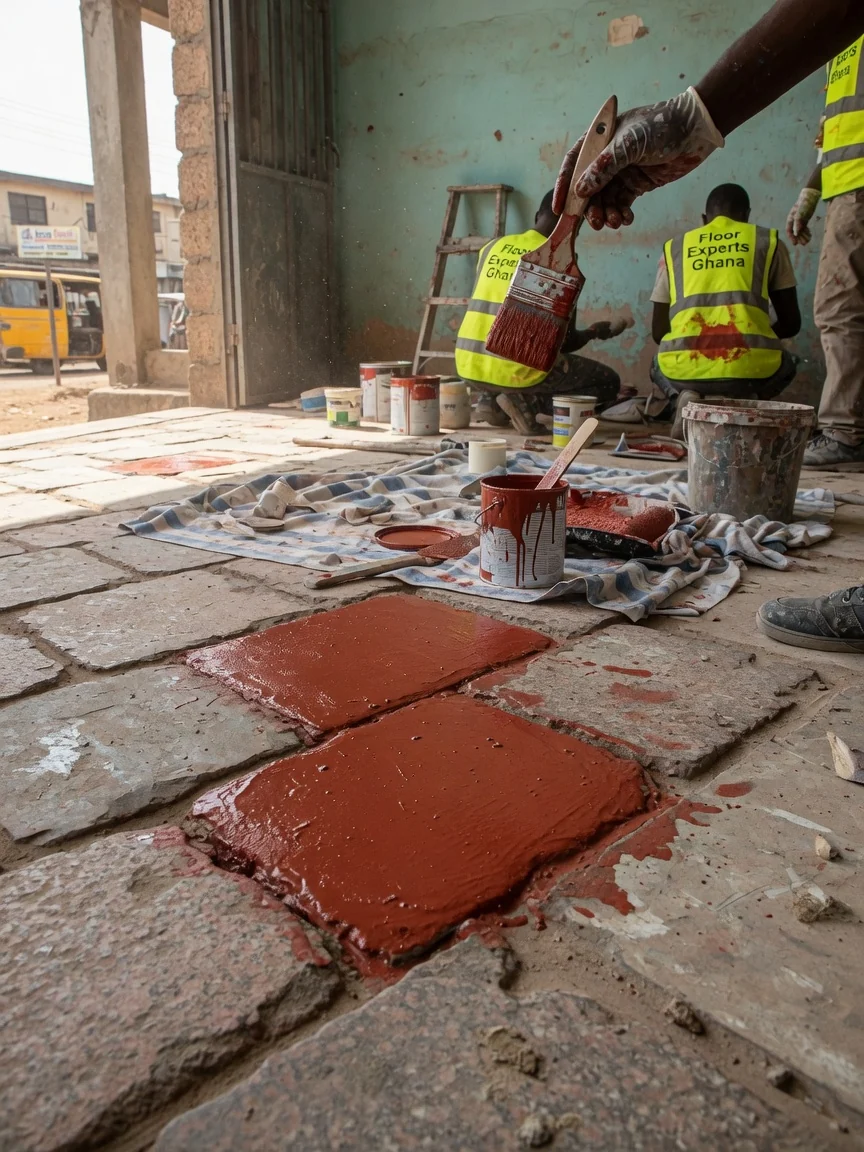
| Breathable impregnating sealer | Protection without trapping moisture | Protects porous stone from staining while letting it release moisture — never a film coating |
How We Restore a Heritage Stone Floor
- Condition survey & diagnosis — map cracks, spalling, efflorescence and wear; confirm the stone and the moisture source.
- Repair, re-bedding & moisture control — re-bed hollow stone, fill losses with matched material, address the moisture.
- Grinding & honing — progressive-grit refinishing to a true plane and the specified finish.
- Re-sealing & handover — breathable impregnating sealer, care protocol and QC record.
Comparing Restoration With Replacement
| Approach | When it fits | Notes |
|---|---|---|
| Restoration | Stone is sound or repairable; character is to be kept | Grind, hone, repair, re-seal; far less disruptive; preserves the original floor |
| Spot repair | Localised cracking or staining | Matched fill and local honing, blended into the surrounding floor |
| Re-sealing only | Surface dull or absorbing but otherwise sound | Re-hone and re-seal where there is no structural damage |
| Replacement | Stone is shattered or lost beyond repair | The exception — most aged stone floors restore well once moisture is corrected |
What Affects the Cost
- The stone type and the extent of wear, cracking, hollowness and staining
- The moisture and efflorescence remediation required before surface work
- The grinding/honing passes and any matched-material repair and re-bedding
- Area (m²), access, and whether the space stays in use during works
Every quote follows a condition survey of the floor — no fixed rate is given before the stone and its moisture state are assessed.
Applications Across Ghana
- Marble, limestone and terrazzo floors in historic and colonial-era residences across Ridge and Cantonments
- Institutional and civic building floors needing repair, honing and re-sealing
- Heritage interiors in the Cape Coast Castle quarter and wider historic estate
- Aged travertine and terrazzo in premium residences and hospitality
Areas We Serve
Floor Experts Ghana restores heritage stone floors across Ridge, Cantonments, East Legon and Greater Accra — plus Cape Coast, Kumasi.
Related Services
- Marble Installation — new bookmatched marble floors and feature surfaces
- Travertine Flooring — new filled-and-honed travertine for premium interiors
- Custom Mosaic Floors — bespoke mosaic and decorative stone work
- Premium Tile — rectified porcelain and ceramic for new floors
Frequently Asked Questions
Why do old stone floors look dull, stained or white-marked? Three things. Foot traffic wears the polish and etches the surface, spills stain unsealed porous stone, and rising moisture brings salts up as white efflorescence. Restoration grinds and hones the surface back, repairs damage, addresses the moisture source, and re-seals with a breathable sealer.
Can a cracked or hollow stone floor be saved? Usually, yes. Hollow flags are re-bedded, cracks and lost areas filled with matched material, then the floor is ground, honed and re-sealed. Replacement is the exception once the moisture and bedding are corrected.
Should a restored stone floor be sealed with a coating? No — with a breathable impregnating sealer, not a film. Porous stone must release moisture; a film-forming coating traps it and causes blistering and efflorescence. We re-seal with a penetrating impregnator.
How much does heritage stone restoration cost? It is quoted on survey — cost varies with the stone type, the extent of cracking, hollowness and staining, the moisture remediation needed, area and access. Request a site survey.