Institutional Floor Commissioning
Architect-coordinated multi-material floor commissioning for banks, hotels, embassies and institutions across Accra — specification, QA and documented handover spanning marble, hardwood, premium tile and mosaic, each zone set and verified to its own standard. Floor Experts Ghana — over 30 years of flooring expertise.
Institutional floor commissioning is the architect-coordinated, governed delivery of a multi-material floor across an institution — specifying, installing and verifying marble, hardwood, premium tile and mosaic, each to its own standard, under one programme with QA hold points and a documented handover. It is specified by banks, hotels, embassies and ministries where the scale, visibility and accountability of a floor demand more than trade-by-trade execution. Floor Experts Ghana has commissioned institutional floors across Greater Accra for over three decades.
Why Institutional Floor Programmes Fail in Ghana’s Conditions — and How We Prevent It
An institutional floor programme rarely fails because one material was wrong; it fails because each material was installed in isolation, to no common standard, with no record of what was done beneath it. One trade lays tile over a screed another trade never moisture-tested; hardwood goes down before its zone is acclimated; nobody owns the transitions where materials meet. And Ghana’s persistent 81–83% humidity finds every gap — stone effloresces on an untested slab, wood cups, grout moulds in an unsealed wet zone — but by then the contractors have demobilised and there is no documentation to trace the fault.
We treat coordinated specification, per-material QA hold points and documented handover as the primary engineering controls. Each zone is held to its own correct standard — stone and tile to ANSI A108/A118 and the TCNA Handbook, hardwood to NWFA guidance — substrates are signed off before any material is laid, every phase is inspected in progress, and a complete commissioning pack is handed to the facilities team. That governance — not any single material choice — is what makes an institutional floor estate hold up and stay accountable in this climate.
Material Zones We Commission Across an Institution
Stone Zones — Marble & Travertine
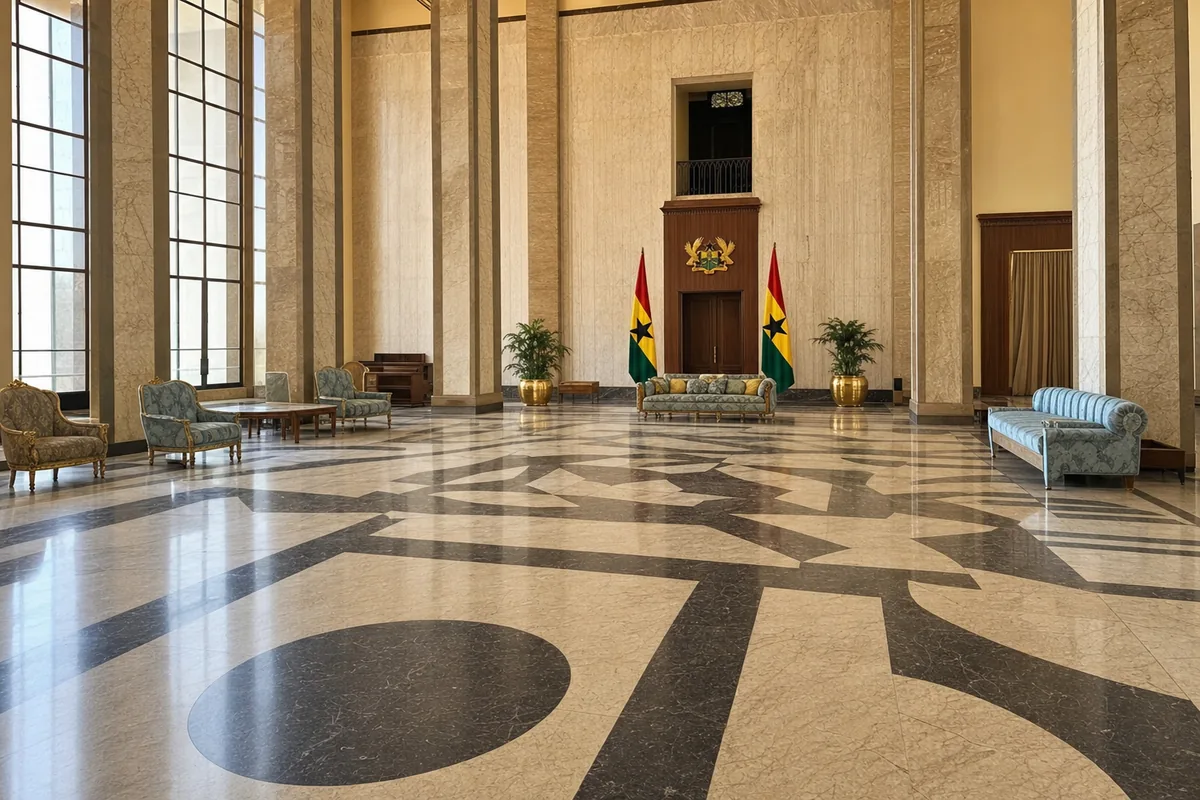
Lobbies, banking halls and formal reception in sealed, ANSI A108-set stone, with moisture-controlled substrates and movement joints.
Premium Tile Zones
Corridors, washrooms and circulation in rectified porcelain to ANSI A108/A118 and the TCNA Handbook, with movement joints and verified DCOF in wet areas.
Hardwood Zones
Boardrooms, executive suites and formal rooms in moisture-tested, acclimated hardwood to NWFA guidance, gapped against the humidity.
Mosaic & Feature Zones
Ceremonial entrances, crests and statement floors in bespoke mosaic, built to an approved drawing over a tightly levelled bed.
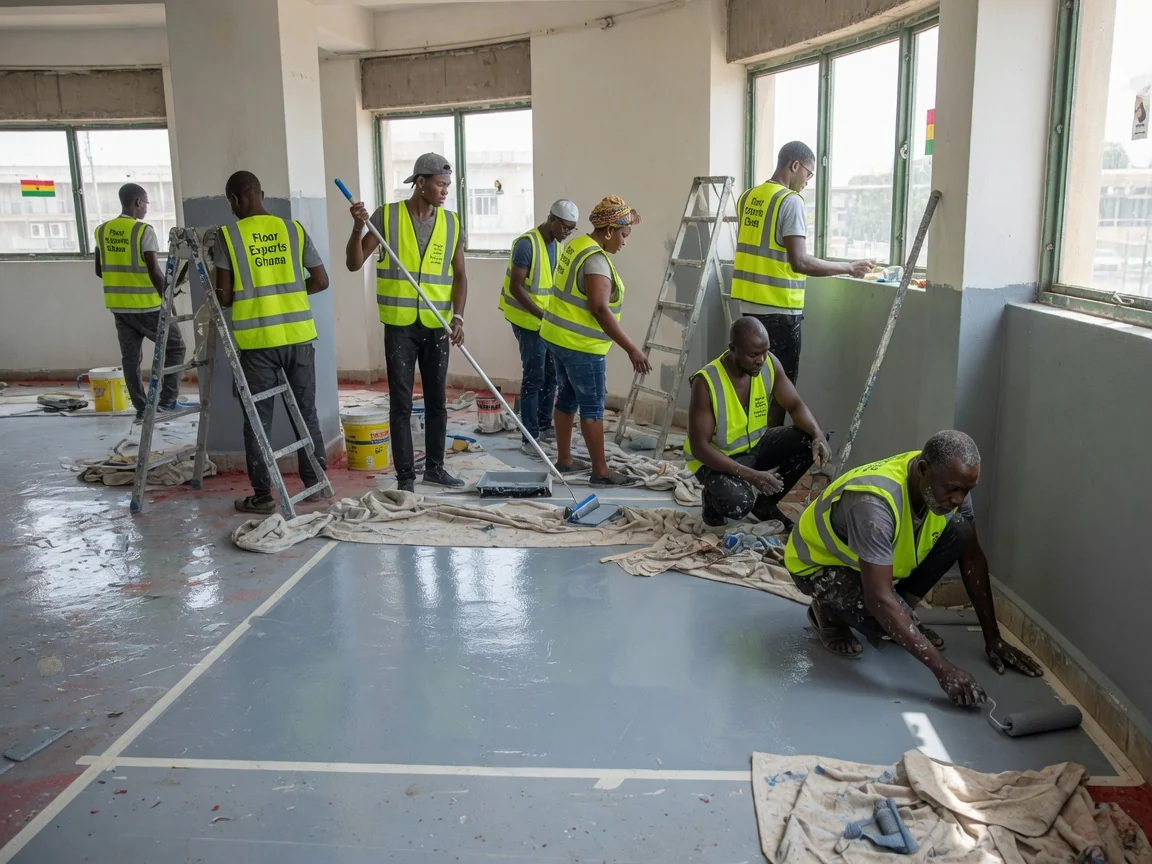
The Commissioning Standards We Govern To
| Zone material | Standard governed to | What it verifies |
|---|---|---|
| Marble / travertine | ANSI A108 (natural stone) + sealing | Full-coverage bedding, moisture control, sealing — verified before sign-off |
| Premium tile | ANSI A108/A118 + ISO 13007 + TCNA Handbook (EJ171) | Setting method, mortar class, movement joints, wet DCOF (ANSI A137.1) |
| Hardwood | NWFA guidance + moisture testing | Wood moisture content, acclimation, expansion gaps |
| Mosaic | ANSI A108 + flat-bed layout | Coverage, layout register, movement joints |
| Programme-wide | QA hold points + documented handover | Substrate sign-off, in-progress inspection, defect close-out, care pack |
How We Commission an Institutional Floor
- Specification review & material-zone mapping — map each zone to its material and standard under one coordinated spec.
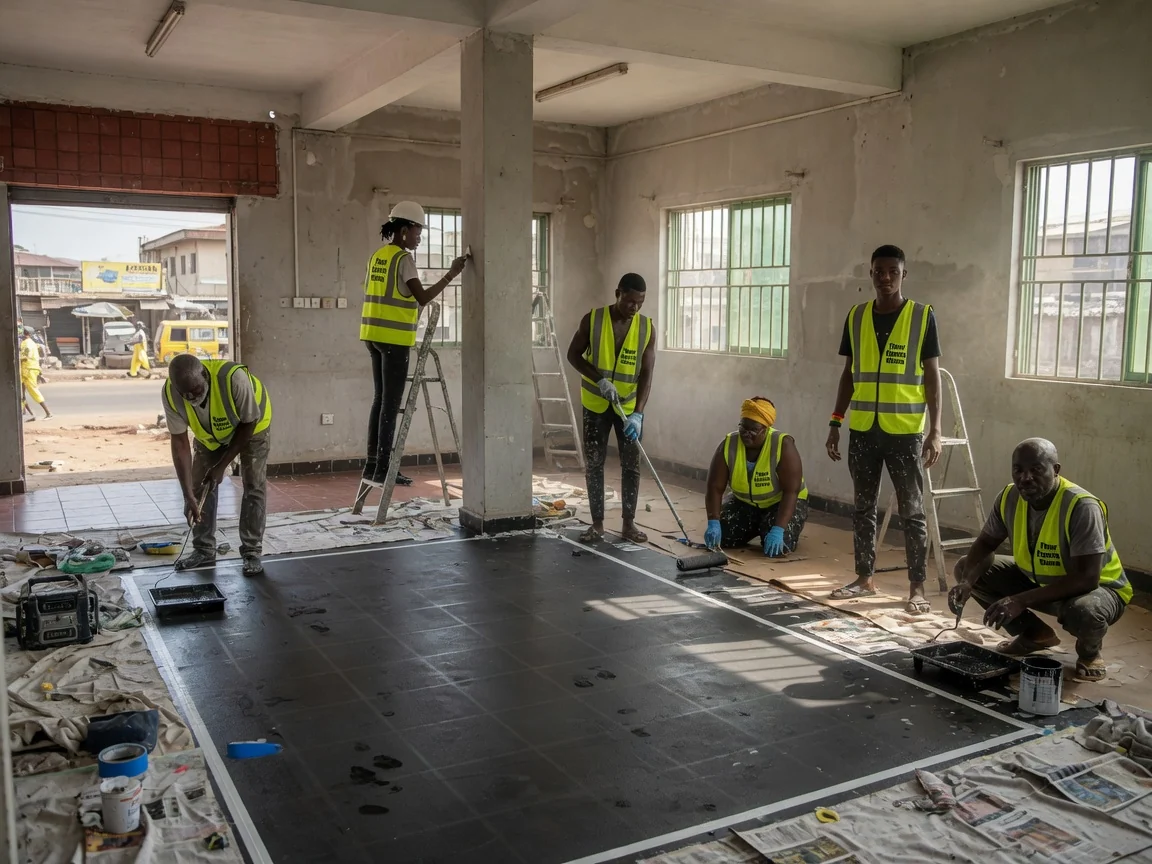
- Substrate survey & QA hold points — flatness, soundness and moisture per material; no laying until sign-off.
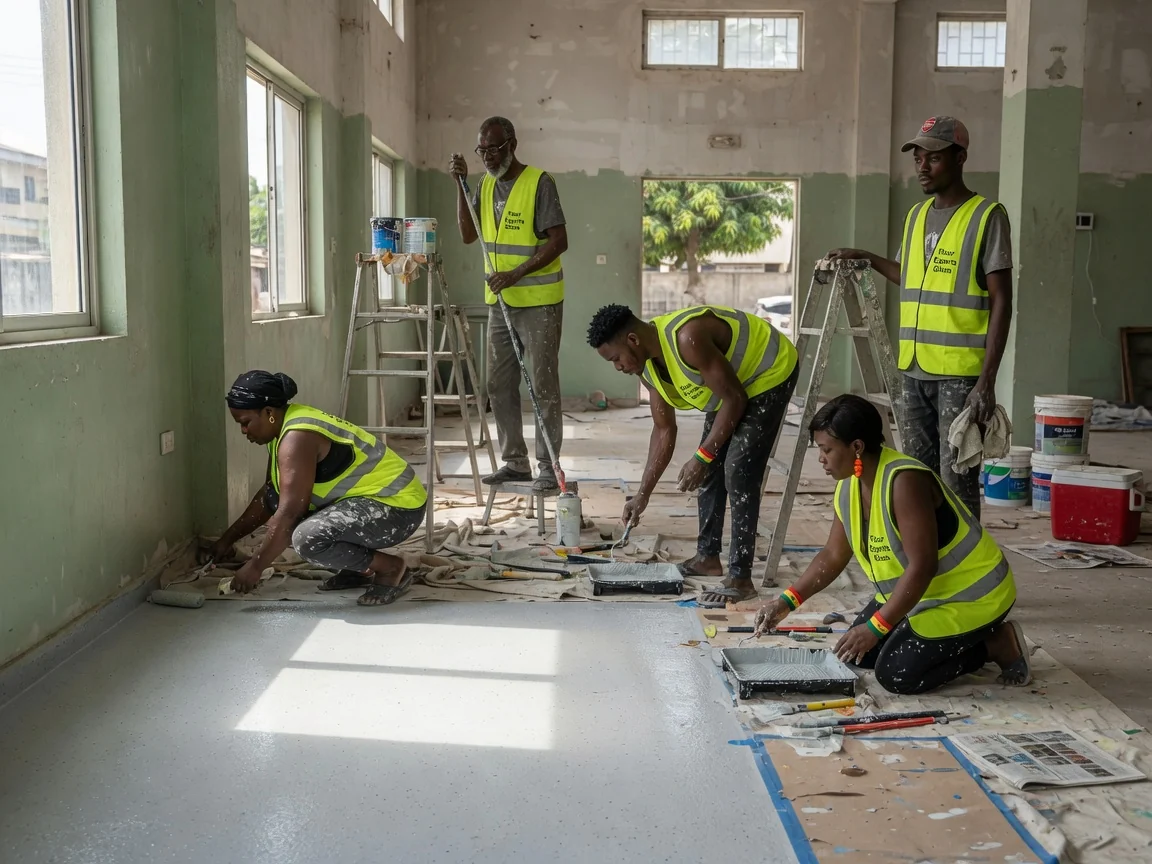
- Sequenced installation & in-progress inspection — coordinate with the main contractor; verify each zone against its standard.
- Defect close-out & documented handover — close the defect schedule, issue the commissioning and care pack.
Comparing a Commissioned Programme With Trade-by-Trade Work
| Aspect | Commissioned programme | Trade-by-trade |
|---|---|---|
| Specification | One coordinated, documented spec | Improvised per trade |
| Substrate QA | Hold points; sign-off before laying | Often skipped between trades |
| Accountability | Single accountable partner | Diffuse; gaps at material boundaries |
| Handover | Documented pack + care protocol | Verbal or absent |
| Outcome in humidity | Faults traced and prevented | Faults emerge after demobilisation |
What Affects the Cost
- The materials and number of zones, and the substrate preparation and moisture control each needs
- The QA, inspection and documentation scope across the programme
- Coordination with the main contractor and phasing around an operational building
- Area (m²), access, and whether the institution stays in use during works
Every quote follows a project survey — no fixed rate is given before the zones, substrates and documentation scope are assessed.
Applications Across Ghana
- Banking halls and Tier-1 financial institution reception floors
- Embassy and diplomatic mission formal suites and ceremonial floors
- Government ministry and institutional administrative wings
- Hotel and hospitality multi-zone floor estates
Areas We Serve
Floor Experts Ghana commissions institutional floors across Ridge, Cantonments, Airport City, East Legon and Greater Accra — plus Kumasi, Cape Coast.
Related Services
- Marble Installation — sealed bookmatched marble for lobby and banking-hall zones
- Premium Tile — rectified porcelain for corridor, washroom and circulation zones
- Premium Hardwood Floors — moisture-managed hardwood for boardrooms and suites
- Custom Mosaic Floors — ceremonial mosaic and crest commissions
Frequently Asked Questions
What is institutional floor commissioning? It is the governed delivery of a multi-material floor across an institution, where each zone — marble, hardwood, premium tile, mosaic — is specified, installed and verified to its own standard under one coordinated programme, with QA hold points and a documented handover.
How are different materials kept to one quality standard? Each material is held to its own correct standard — stone and tile to ANSI A108/A118 and the TCNA Handbook, hardwood to NWFA guidance — and the whole programme is governed by QA hold points, in-progress inspections and a single documented spec.
What documentation is handed over? A commissioning pack: the specification, substrate and moisture records, material data sheets, method statements, QC and defect-close-out records, and a per-surface care protocol. Warranty and care terms are documented, not verbal.
How much does institutional floor commissioning cost? It is quoted on survey — cost varies with the materials and zones, substrate preparation and moisture control, QA and documentation scope, area and access. Request a site survey.